-
The future Common Agricultural Policy (CAP) is at risk of a substantial reduction in its EU added value and societal legitimacy compared to today.
The Commission's proposal gives Member States more spending flexibility and weak incentives to use funds for the environment, climate and animal welfare – spending with high EU added value. At the same time, it establishes common spending requirements for interventions such as coupled and degressive area-based income support (DABIS) that contribute far less to shared EU objectives.
-
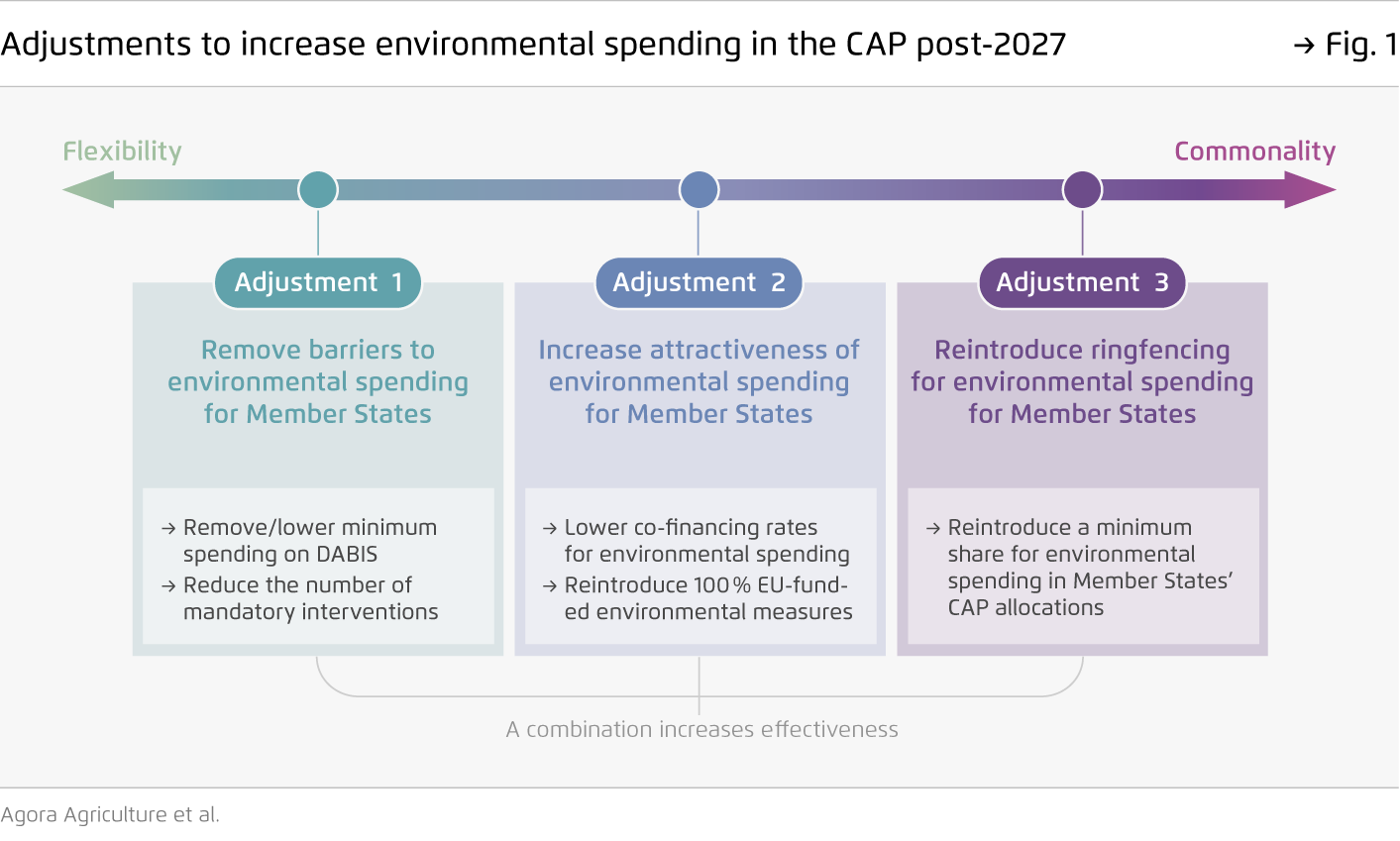
Three adjustments in the CAP proposals along the spectrum between “flexibility” and “commonality” would increase the CAP’s EU added value.
First, removing the minimum spending requirement for DABIS would increase the flexibility to spend more on the environment. Second, lowering national co-financing rates would incentivise environmental spending without reducing flexibility. Third, ringfencing a minimum share of the budget for environmental, climate and animal welfare objectives would strengthen the CAP’s common nature.
-
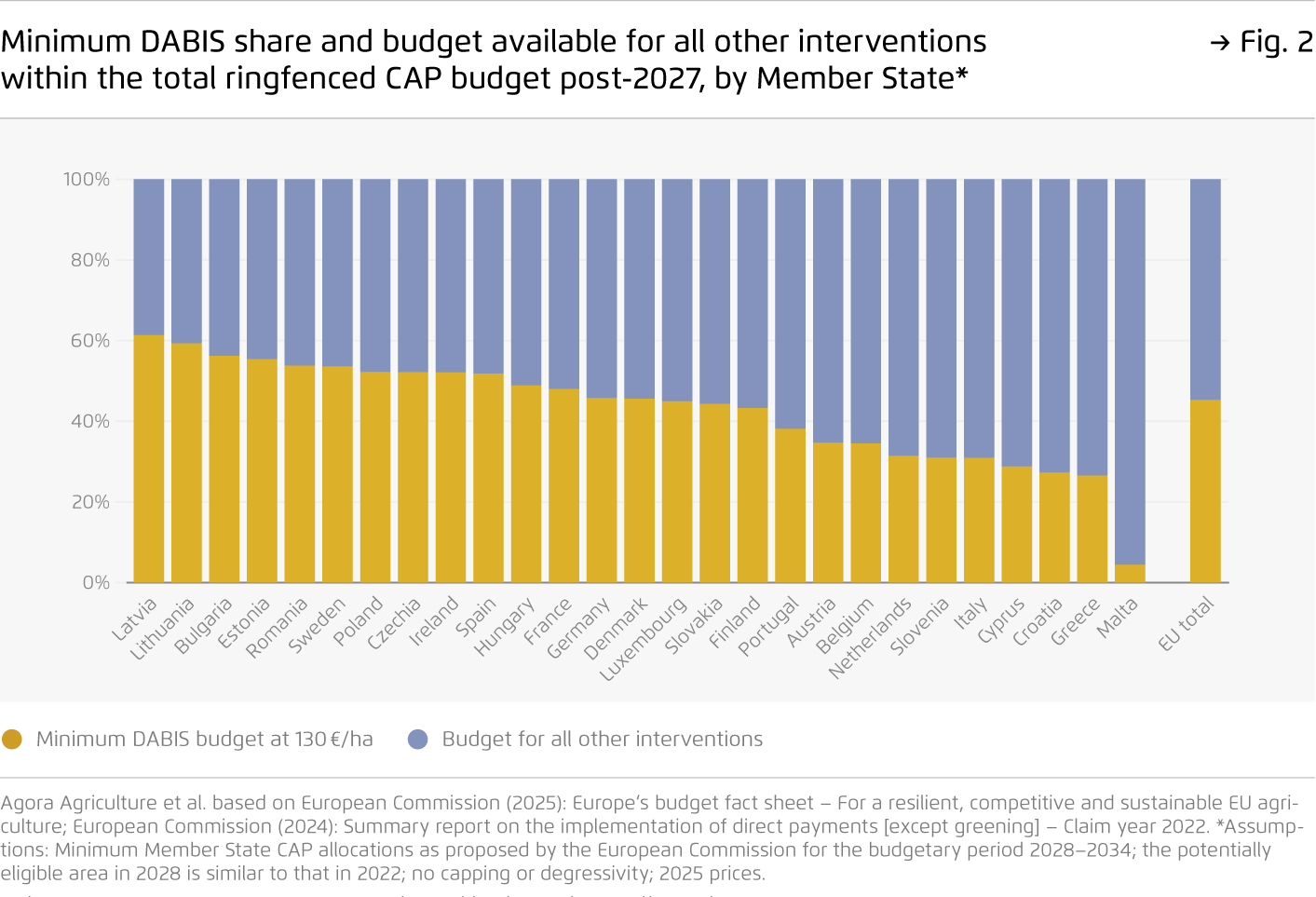
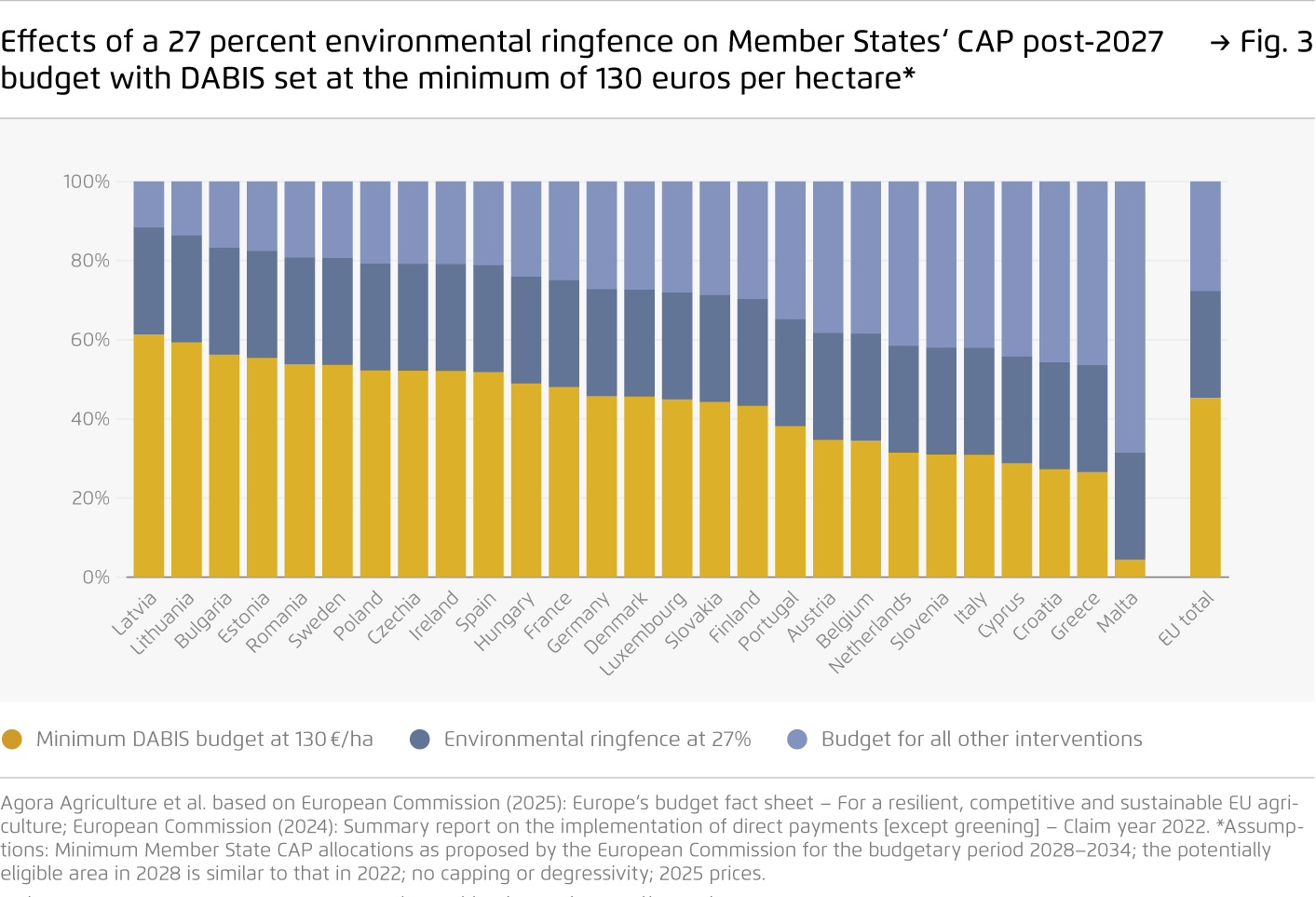
Adjustments are essential because, under the current proposal, the minimum budget required for DABIS alone would make up over half of the CAP budget in more than a third of Member States.
Together with an increased number of mandatory interventions that also bind funding, this leaves little room for an environmental ringfence of similar size to that of the current CAP. Moreover, maintaining current levels of spending on eco-schemes and agri-environmental and climate measures would require Member States to spend almost double the amount of their current national contribution.
-
What matters is how flexibility and commonality are applied.
Removing barriers, incentivising spending and reserving a budget for the environment will support common objectives without affecting Member States’ flexibility to implement measures in a highly diverse EU. Combined, these three adjustments would improve the next CAP’s contribution to EU added value while reducing the burden on national budgets.
Making flexibility and commonality work for more EU-added value
Three ways to increase environmental spending in the next CAP
Summary
The post-2027 CAP risks delivering less EU added value than today's. While Member States gain more spending flexibility, the proposal only provides weak incentives to use funds for environment, climate and animal welfare interventions – spending with high EU added value – while imposing common spending requirements on measures that contribute far less. This policy brief outlines three adjustments that apply “flexibility” and “commonality” in a way to strengthen the CAP's EU added value: removing the minimum spending requirement on area-based income support, lowering national co-financing rates for environmental spending, and ringfencing a minimum budget share for environmental objectives.
Income support alone could make up over half the CAP budget of one third of the Member States and maintaining the same level of environmental spending would need double the current national expenditure. Against this backdrop, these adjustments would strengthen the CAP's EU added value while easing pressure on national budgets.
Key findings
Bibliographical data
Downloads
-
Policy Brief
pdf 368 KB
Making flexibility and commonality work for more EU-added value
Three ways to increase environmental spending in the next CAP
All figures in this publication
Adjustments to increase environmental spending in the CAP post-2027
Figure 1 from Making flexibility and commonality work for more EU-added value on page 6

Minimum DABIS share and budget available for all other interventions within the total ringfenced CAP budget post-2027, by Member State
Figure 2 from Making flexibility and commonality work for more EU-added value on page 7