-
A key task for agricultural policy is to enhance the competitiveness of European farms that deliver public goods, such as climate and biodiversity protection.
Certain environmental services are best provided at the farm level, while others require coordination across farms within the agricultural landscape. Tailoring policies, including the Common Agricultural Policy (CAP), to these two levels can improve the efficient use of public funds.
-
Farm-level benchmarking and landscape-level environmental measures are two complementary approaches to cost-efficiently integrate sustainability into farm business models.
By emphasising performance, both methods give farmers greater flexibility to implement site-adapted measures. When well-designed, these approaches can replace some existing policy instruments, helping to reduce bureaucracy.
-
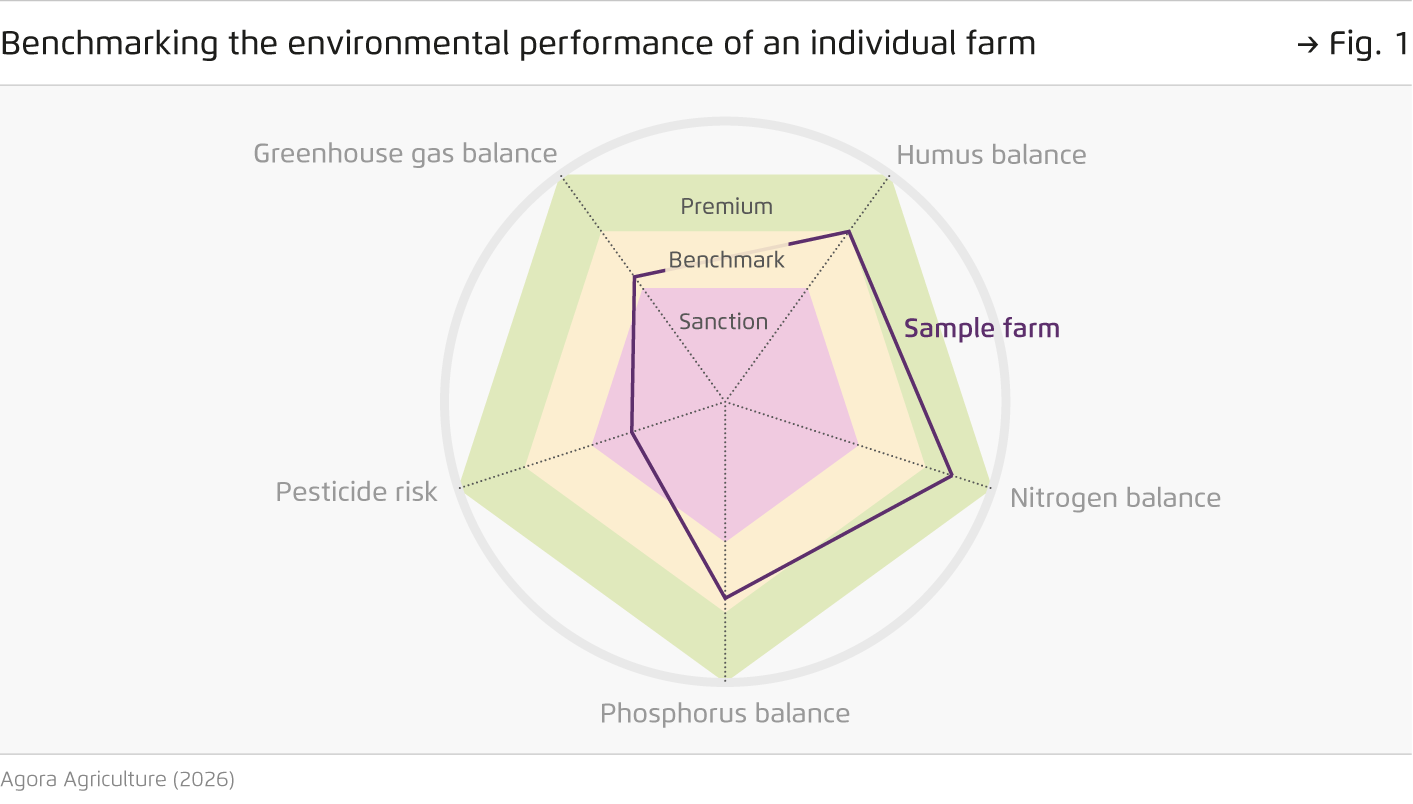
Farm-level benchmarking can become a promising method for assessing and improving the environmental performance of individual farms.
Performance is measured using predefined indicators and benchmarks, such as for nitrogen use efficiency and reduced pesticide risks. When combined with an incentive model that rewards or sanctions performance levels, this approach encourages continuous improvement. Within legal limits, farmers can select their preferred methods to improve performance.
-
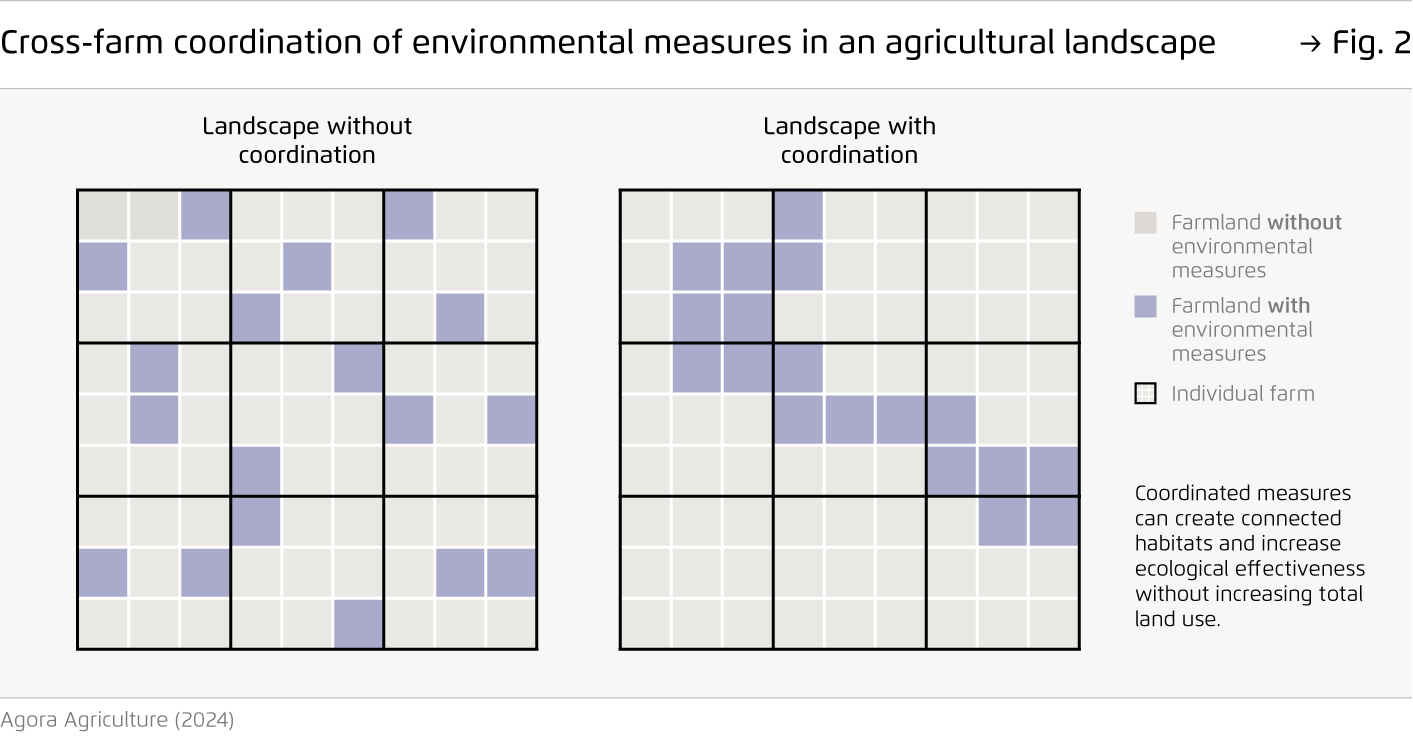
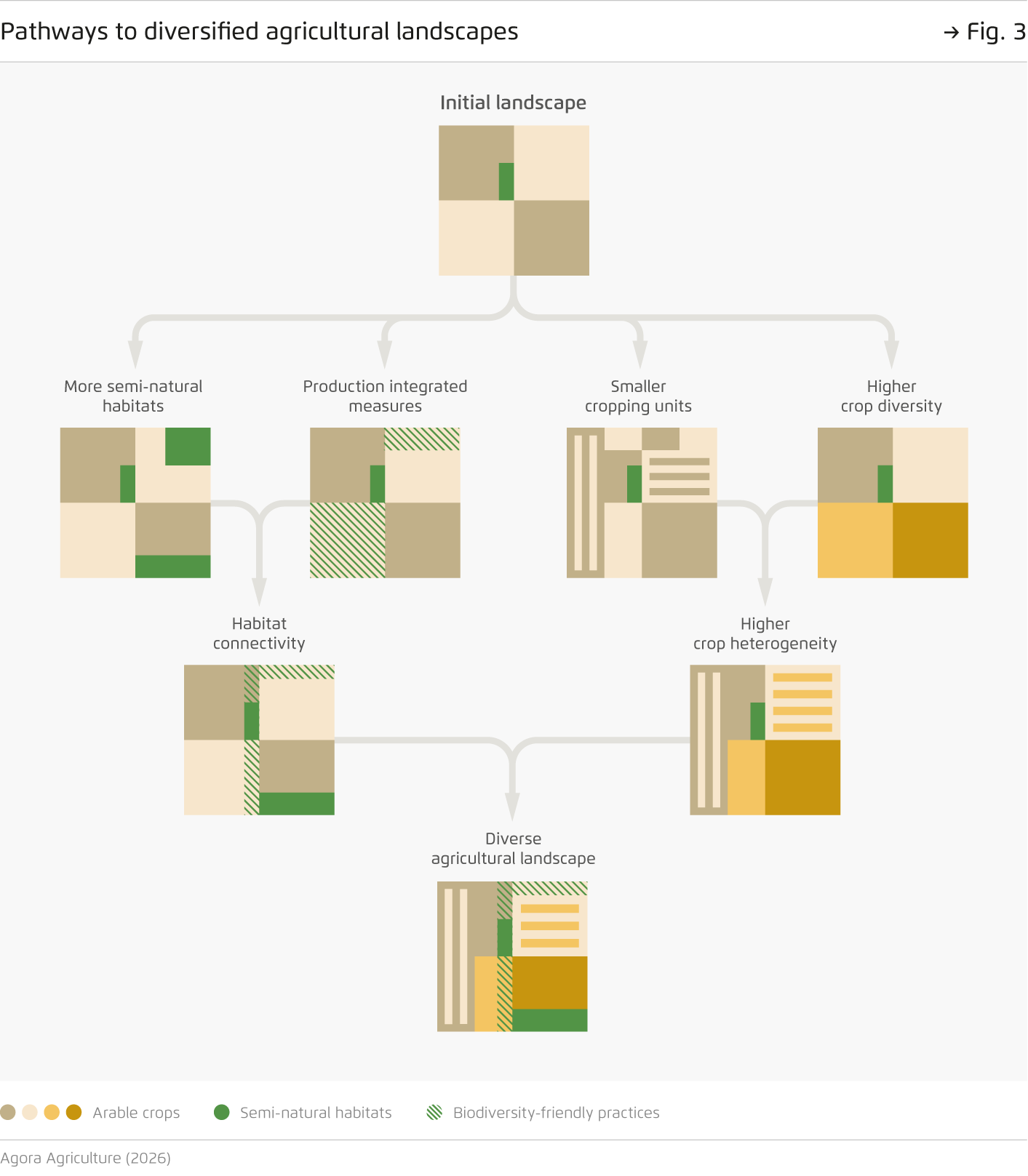
Landscape-scale measures to protect biodiversity can provide high environmental benefits at low cost by making an efficient use of land.
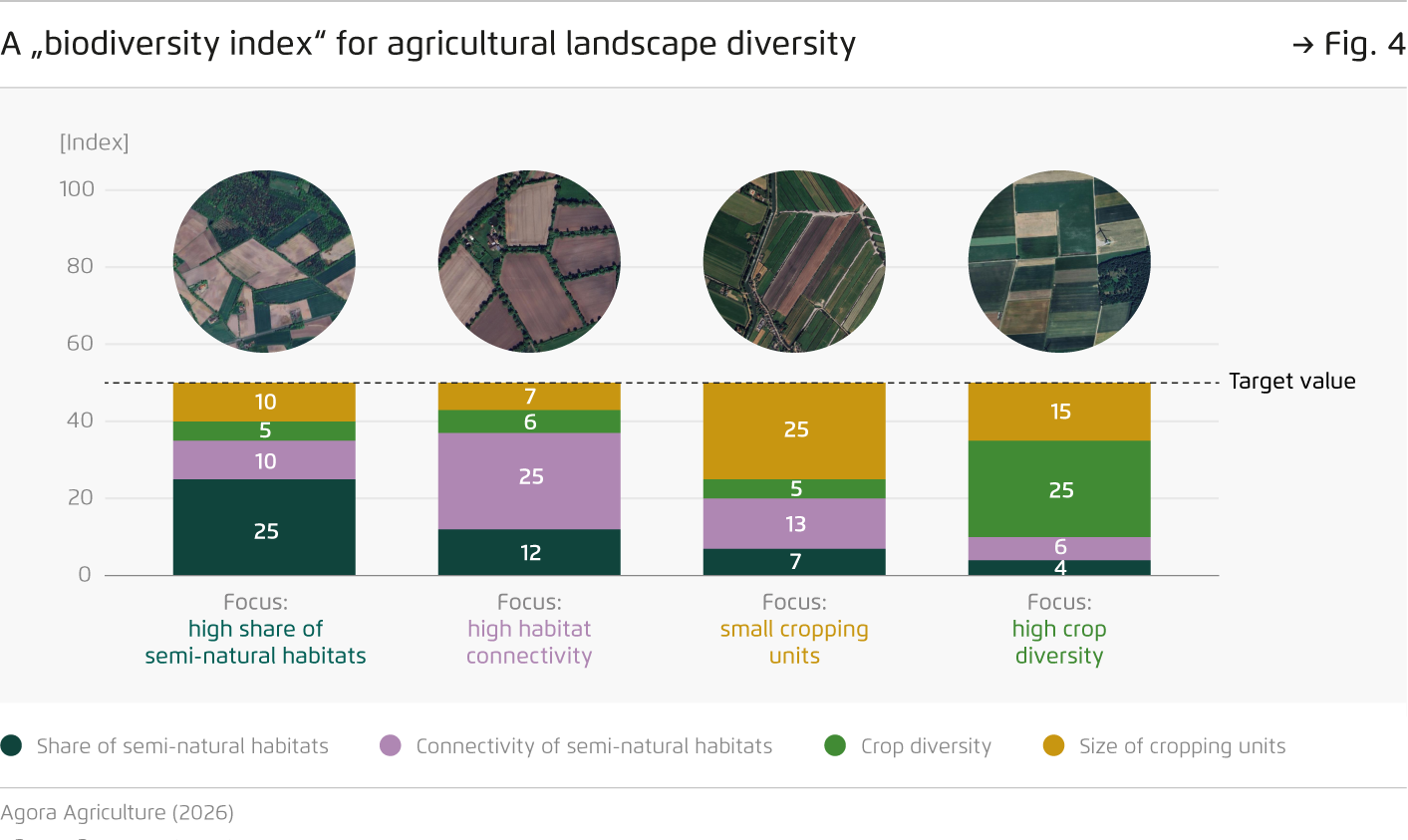
Structurally diverse agricultural landscapes are vital for enhancing biodiversity. Designing and implementing landscape diversification measures across multiple farms can improve cost-efficiency and increase farmers’ engagement. A “biodiversity index” that evaluates the link between landscape structure and biodiversity can support the planning of these measures.
Less red tape, more results
How benchmarking and landscape coordination can make sustainable farming more competitive
Summary
Strengthening the competitiveness of farms that provide public goods such as climate change mitigation, water protection, biodiversity conservation or animal welfare is essential for a resilient and future-proof agricultural sector.
This briefing outlines two complementary approaches to embed sustainability in farm business models while promoting a more targeted use of public funds and reducing bureaucracy:
- The first approach is a benchmarking and performance-based remuneration system for environmental services provided by individual farms,
- The second approach deals with cross-farm coordination to preserve and improve biodiversity in agricultural landscapes.
These concepts can support the implementation of the next Common Agricultural Policy (CAP) and the European Commission’s development of an “on-farm sustainability compass.”
Key findings
Bibliographical data
Downloads
-
Policy Brief
pdf 598 KB
Less red tape, more results
How benchmarking and landscape coordination can make sustainable farming more competitive
All figures in this publication
Benchmarking the environmental performance of an individual farm
Figure 1 from Less red tape, more results on page 6

Cross-farm coordination of environmental measures in an agricultural landscape
Figure 2 from Less red tape, more results on page 8